Open Water Swimming Kit
Survival swimming clothes protect you in open water and on the beach against rocks, pebbles, sunburn, jelly fish and wind chill. Wear at least the outer layer, just to be safe.
We wear full gear for realistic training and and fitness unless otherwise instructed. "Full Gear" means two long sleeve tops, trousers, socks and boots, and a helmet where required.
Be Visible
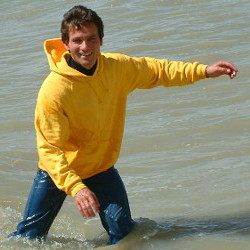
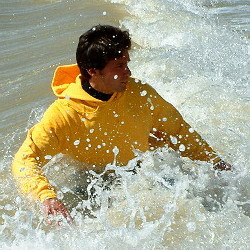
Bright coloured swimming clothes and a hat or hood can be seen by fast moving traffic. Lifeguard uniforms are easy to swim in as they are designed to be worn for water rescues.
Swim with whatever clothes you feel comfortable in. Just make sure they fit well and don't interfere with your swimming ability. Gain experience by swimming in different types of clothes like tee-shirt, sweatshirt, trousers or jeans, anorak or windproof rain suit.
Waterproof clothes are the most practical outfit as they dry quickly,
don't weigh much and protect you from wind chill.
Depending on their design they hold more or less water when swimming.
You can find all sorts of robust and inexpensive training gear in army surplus stores.
Full Survival Gear
Swimmers should bring three unlined clothing layers (base, middle, outer), as used in canoeing, coasteering, sailing or other adventure sports. High visibility clothes would be an advantage.
This will get wet:
- T-shirts (long and short sleeves)
- Hoodie, sweatshirt or pullover
- Trousers, cargo pants or jeans
- Anorak and rain pants, or coverall
- Trainers or sports shoes and socks
- Poncho as shelter and changing room
- Sleeping mat as float and for sitting on
Some swimmers like to wear neoprene boots or socks, balaclava hats and wet suits,
especially in colder weather if they want to spend more time in the water.
Neoprene can be quite delicate,
so you may want to wear a splash top and pants on top to protect it from rough surfaces.
Always start a session in dry kit.
If you plan several swimming sessions, you need need a bit more gear
as it is not nice to put on clammy cold clothes after a warm-up break.
Remember to bring a change of dry clothes for your way home.
Socks and Shoes
To keep your feet proper safe, grab some sandals or trainers that are light and comfy. Go for open-toe sandals if you’re chilling by the pool or beach, or some sports shoes if you’re doing something more active.
Pair them with some decent socks for that extra cushioned feel and to stop any annoying rubbing or blisters. Make sure they’re snug but not too tight.
When you dive in for a swim, you’ll notice the shoes create a bit of drag, slowing you down just a tad. Don’t stress, it’s normal! Loads of water sports like kayaking, paddleboarding, or even water aerobics need you to wear shoes to protect your feet from sharp rocks, hot sand, or slippery surfaces. So, get used to that feeling, and you’ll be smashing it in no time!
Neoprene Boots and Socks
Neoprene footwear keeps your feet toasty warm, but can be delicate on rough beaches. The soles (if any) are not at tough as shoes or sandals.
We found that neoprene socks worn inside sandals is a good compromise.
Your feet stay warm but you have good traction on land, around slippery rocks and in the water.
Dry Bag for Water Trekking
Some rucksacks are completly waterproof, but you could use an old rucksack with drain holes that keep the water from filling it up.
Everything that must stay dry goes inside robust waterproof bags, but no more than that. They provide the buoyancy which lets you use it as a flotation device.
- Dry clothes and shoes to change into afterwards
- Sleeping bag and mat (mission-dependent)
- Plenty to eat and drink
- A large beach towel